

Article: Hotel Bedroom Lighting Specification: Key Considerations
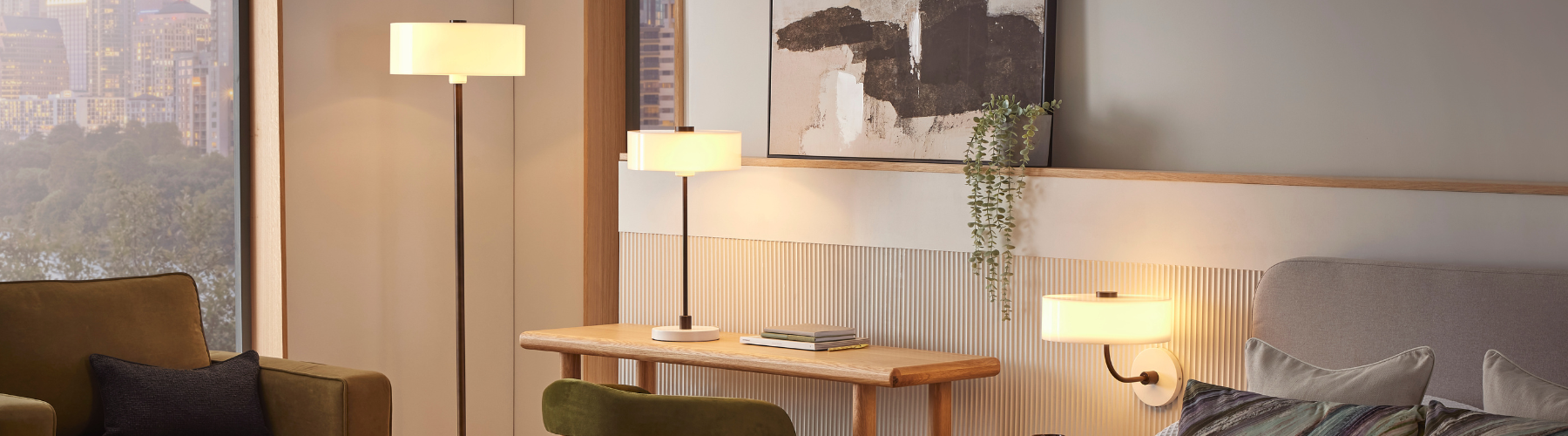
Hotel Bedroom Lighting Specification: Key Considerations
Lighting schemes for hotel bedrooms need to balance atmosphere and functionality with the practical demands of a working hotel environment. For architects and interior designers, specifying the right fitting is only part of the challenge; position, light quality, controls, mounting and comfort must work together cohesively.
Guestrooms need to support very different moments throughout a stay, from reading and working, to relaxing and wind-down. A considered lighting scheme offers the flexibility to control these experiences, supporting comfort and wellbeing while remaining consistent with the hotel's brand standards.

This guide looks beyond the fundamentals of hotel bedroom lighting design to explore the specification decisions that can influence how successfully a scheme moves from concept and sample room, through to installation and full project rollout.
Why Lighting Deserves Specialist Attention in Hotel Bedrooms
Hotel room lighting specification starts well before a fitting reaches technical drawing. For architects, specifiers and interior designers, early specialist manufacturing input can help test what’s possible, identify potential constraints and resolve them before they become issues later down the line.
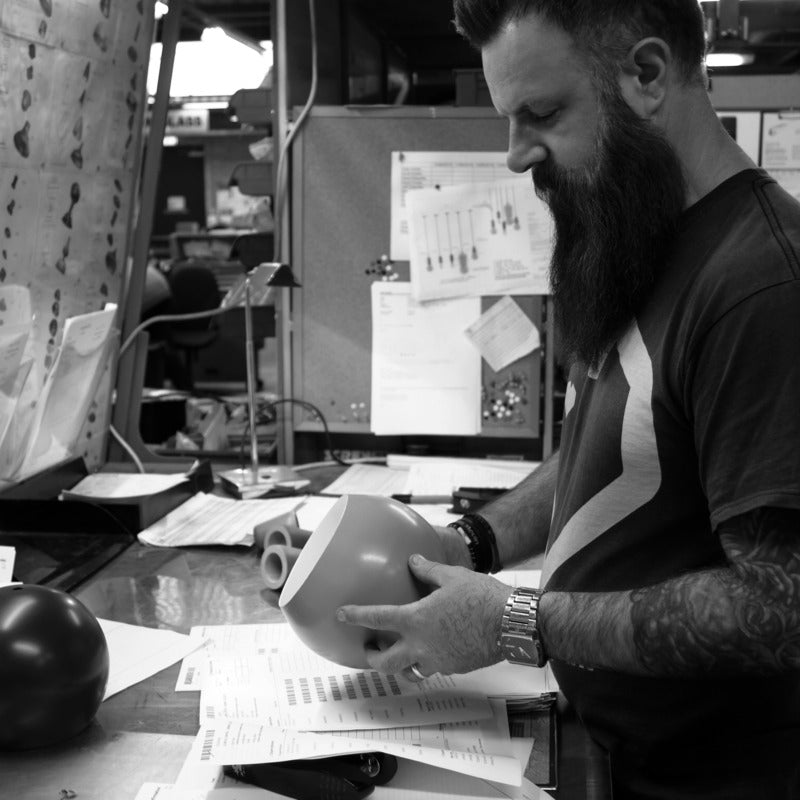
Having been around since 1987, the team at Northern Lights have seen hundreds of guestroom lighting briefs from early design development through to production and installation, giving us a practical understanding of where seemingly small decisions can have much bigger implications for the finished scheme.
The Layered Approach to Hotel Bedroom Lighting
Well-considered hotel bedroom lighting combines different layers of light to support different activities, moods and times of day. The key is how those layers work together, and how much control they give the guest.
Ambient lighting
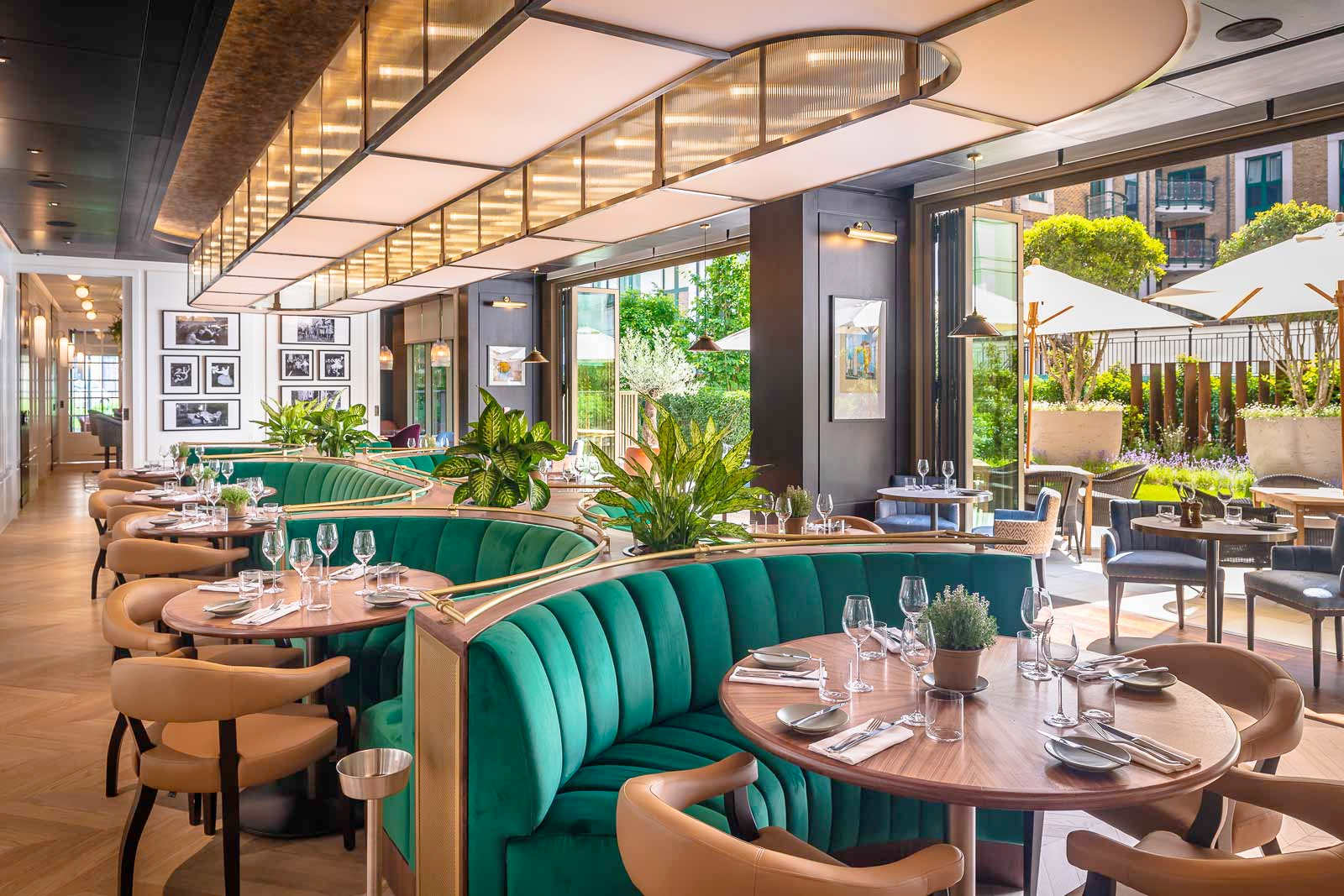
Ambient lighting provides the room's overall level of illumination and atmosphere. Depending on the scheme, this might come from ceiling fittings, recessed sources, wall lights or concealed illumination.
Ambient light needs to feel comfortable at lower levels while providing sufficient illumination when the guest first enters or needs to move around the room. Dimming is therefore particularly useful, allowing the same scheme to support different times of day and activities without relying on separate circuits for every scenario.
Task lighting
Task lighting provides more focused illumination where guests need to see clearly, such as beside the bed, at a desk, dressing area or vanity.
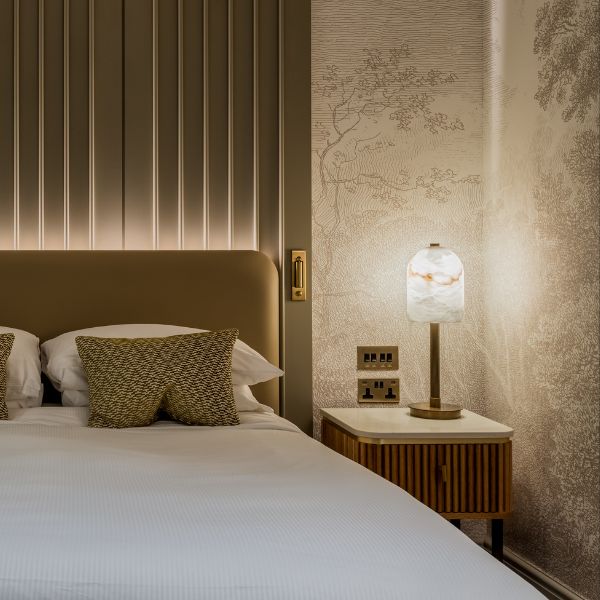
Bedside reading lights are particularly important in providing adjustable, directional illumination. Desk lamps provide a similar level of task lighting for business guests, while vanity areas and illuminated mirrors need to provide even, brighter light without creating harsh shadows or excessive glare.

Accent lighting
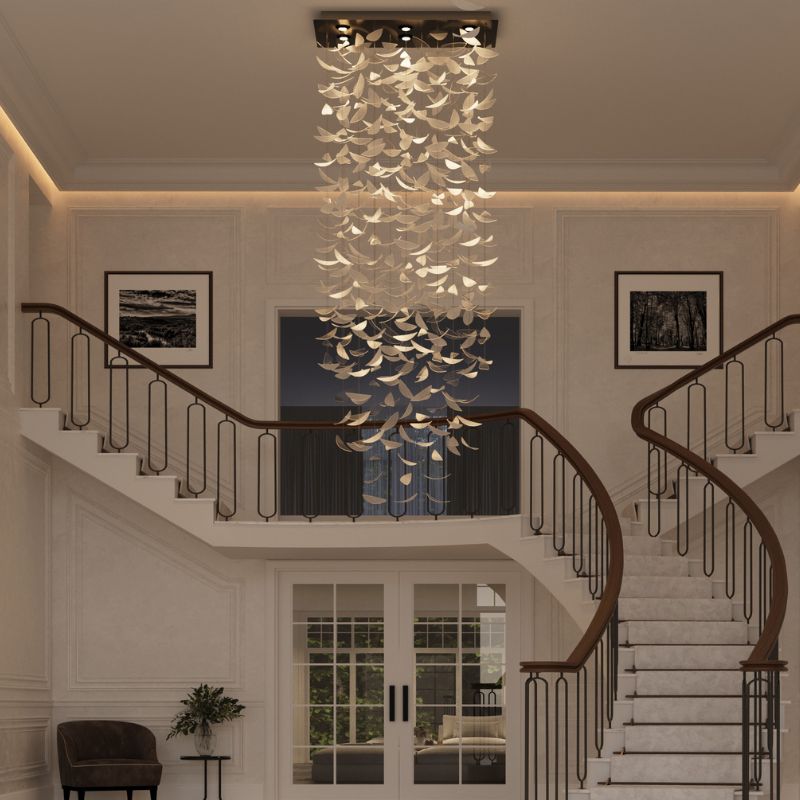
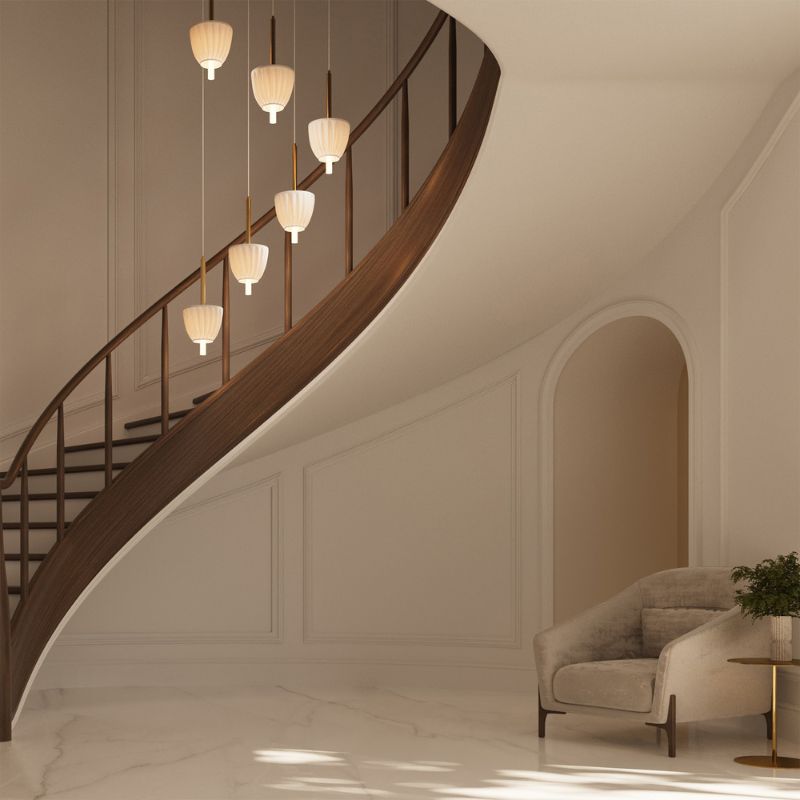
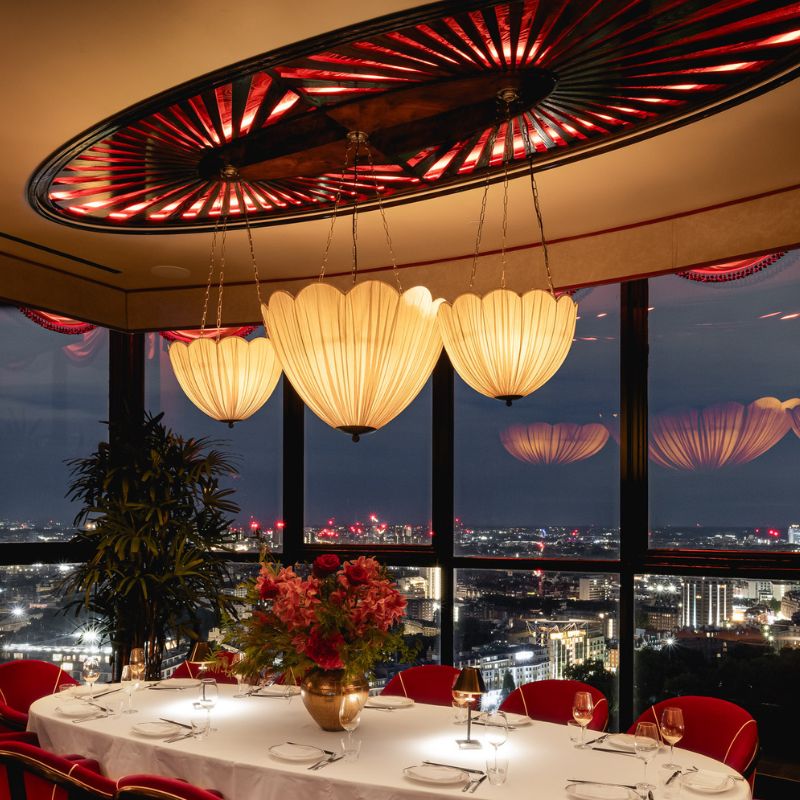
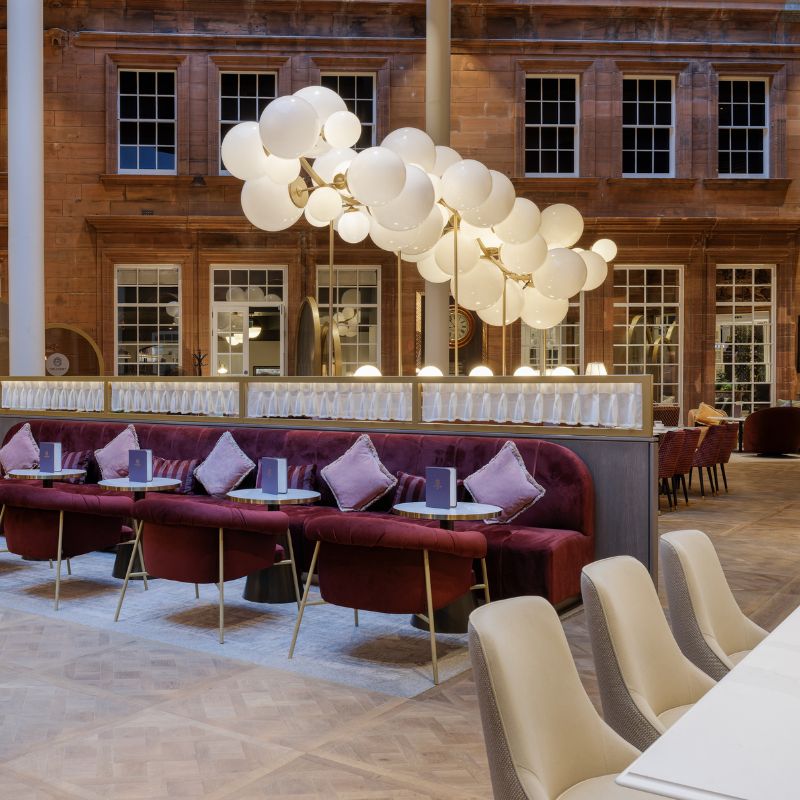
Accent lighting introduces another layer of visual interest, drawing attention to architectural features or design highlights. This might include a decorative ceiling fitting, wall light or table lamp chosen to complement the wider interior scheme, with more sculptural pieces used in high-end hospitality where the design calls for a stronger focal point.

This is also where lighting can contribute more directly to the identity of a hotel. Materials, finishes, proportions and shade details can turn a functional fitting into a considered design element, adapted or developed specifically for the brand standards.
The strongest schemes allow these layers to work independently and together, giving guests control over the level and character of light according to what they are doing and how they want the room to feel.
Practical Specification Considerations
There are multiple considerations around how specified fittings will be used, mounted, controlled, manufactured and installed. Resolving these points while the design is still flexible can avoid compromises to the lighting scheme - or costly changes on site.
Here are some of the specification decisions that experienced lighting manufacturers know can make or break a hotel bedroom scheme.
Design plan vs reality
The fittings on the specification brief need to work in the actual room, not just on the design plan.
The lighting scheme needs to provide balanced illumination without creating glare or excessive shadowing with adjacent elements, meaning scale, projection and positioning are critical factors. Where a fitting is integrated into a headboard or bespoke joinery, the lighting and furniture specifications need to be developed together - rather than resolved separately later.
Look beyond colour temperature
Colour temperature is an important consideration, but it is only one part of light quality. Colour rendering (CRI), diffusion, brightness and the way light interacts with surrounding materials all influence how the finished room feels.
A hotel bedroom may use several decorative and functional light sources, so consistency matters too. Stark differences in colour temperature or light quality between fittings can disrupt an otherwise carefully coordinated scheme.
Glare control without design compromise
Glare can quickly turn an attractive fitting into an uncomfortable one. The position of the light source, shade construction, diffusion, beam direction and the guest's viewing angle all need to be considered together.

Good decorative lighting needs to balance the visual treatment of the fitting with how the light actually behaves in use. This is particularly relevant to elements bedside reading lights, where the guest may be looking towards the fitting while reading or settling into bed.
Resolve controls and drivers early
There’s an increasing need for guestroom lighting to be connected to wider integrated control systems, particularly in luxury and wellness-led hospitality. Dimming compatibility and the relationship between fixtures and the room's control system are as important as the design itself.
For design and procurement, knowing whether the fitting features a remote or integrated driver is a simple thing that’s easy to overlook. For remote drivers, establishing where the driver will be located can be missed during specification, leading to problems later down the line.
If a driver is concealed within a headboard, joinery or ceiling void, for example, there needs to be a practical solution for installation and future access. Resolving this early can prevent visible components or inaccessible drivers becoming a late-stage compromise.
Design for the rollout, not just the sample room
A sample room demonstrates how a fitting looks and performs within the finished interior. But once the design moves into production, consistency becomes just as important as the original concept.
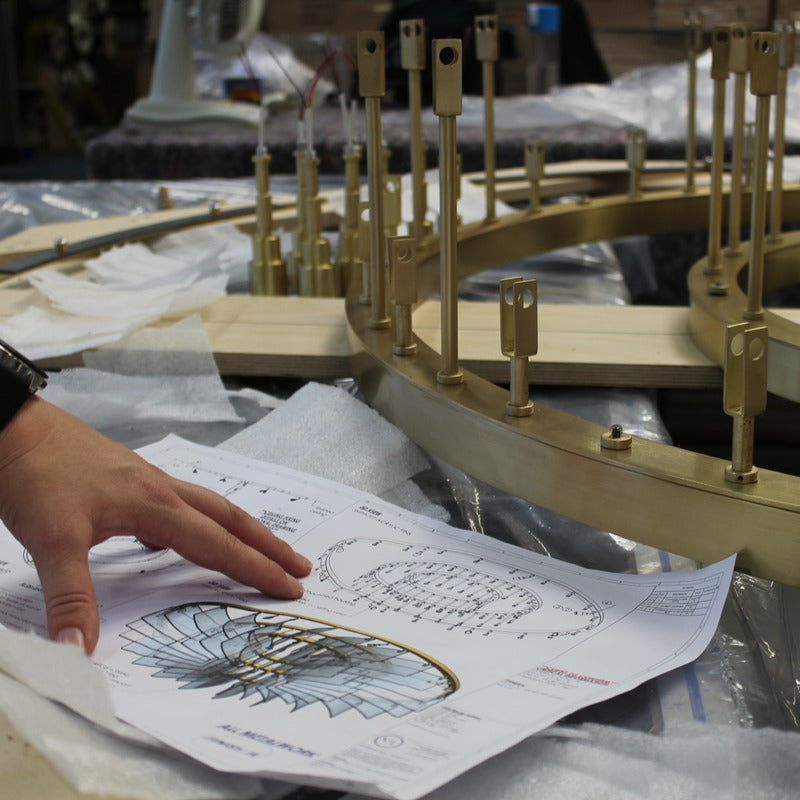
Finishes, dimensions, shade materials, glass, ceramics and other components can all introduce variation. The approved sample therefore needs to translate into a specification that can be reproduced accurately, and at scale, across the project if consistency is a core part of the design narrative.
Northern Lights has supplied full guestroom schemes at very different scales, from Premier Inn projects spanning tens of thousands of rooms across the UK and Germany to highly detailed luxury hospitality projects with strict brand standards. At either end of the spectrum, the challenge is the same: ensuring the design intent remains consistent across the transition from concept to production to install.
Is bespoke always needed?
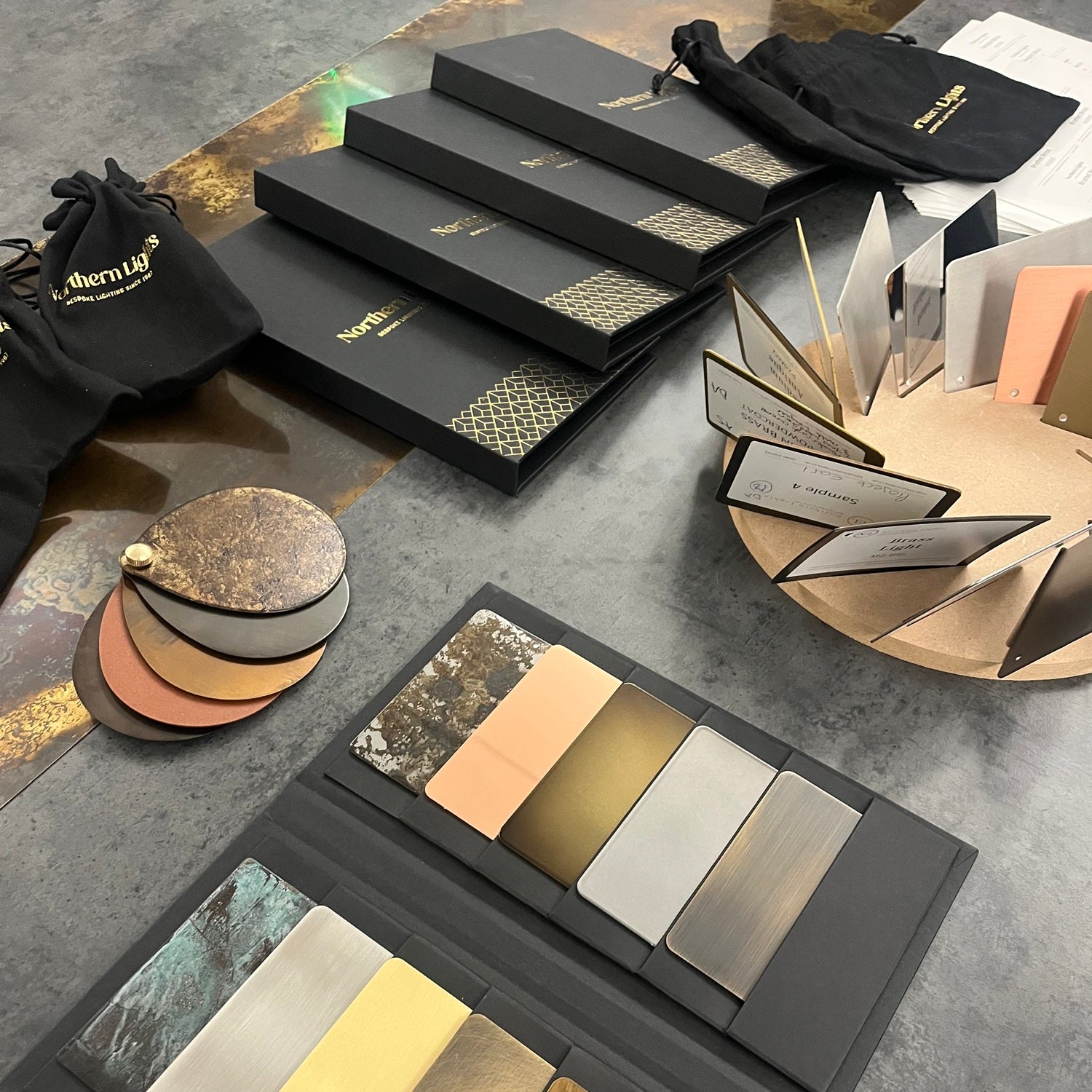
Bespoke doesn’t have to mean starting from scratch. Our lighting collections can be tailored through proportion, dimensions, finishes, material or mounting arrangement to coordinate with other FF&E elements in the scheme. This can provide a practical middle ground between an off-the-shelf product and a completely new fitting.

Corvus pendant transformed into a custom wall light | Hilton Newcastle
Bespoke lighting design, however, may be appropriate where a project has specific design requirements, brand standards or material and finish specifications that cannot be met through adaptation. Bringing in manufacturing expertise right at the start of the process establishes what’s achievable, how it will be constructed and where potential constraints need to be resolved.
From specification to finished scheme
Every hotel project has its own challenges. Good lighting specification is about more than choosing a fitting. It is about making sure the design, light quality, practical requirements and manufacturing process can work together from the outset.
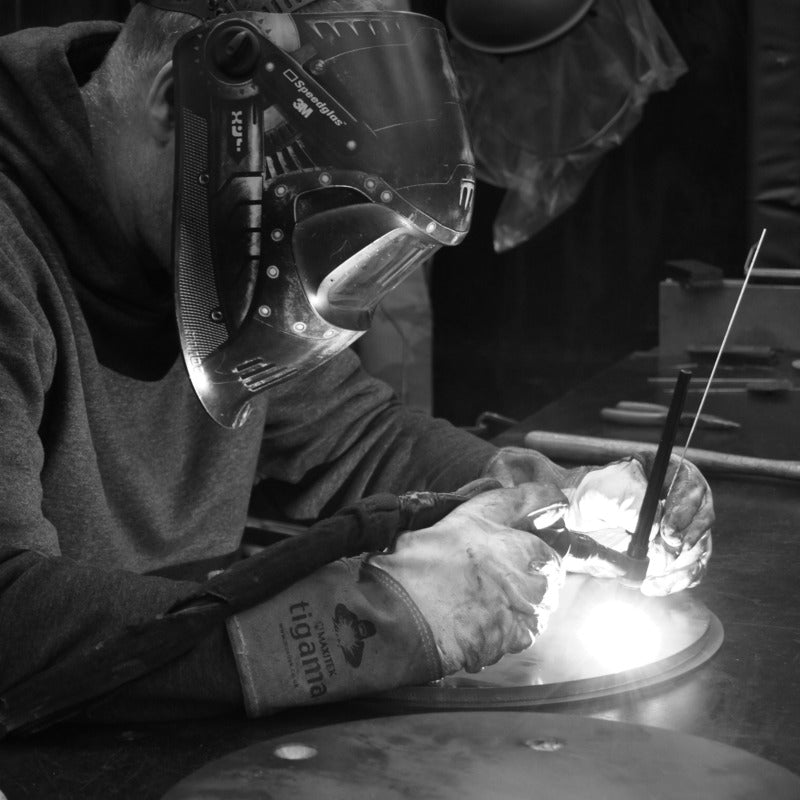
Northern Lights combines almost four decades of decorative lighting design and manufacturing expertise with the flexibility to develop, sample and produce lighting for projects at different scales.
Join our Design Partner Program to access trade pricing and project support, or contact our team to discuss a specific hotel lighting requirement.
Explore customisable hospitality lighting solutions.
HOTEL CEILING LIGHTS HOTEL TABLE LAMPS